
AI storage and computing power increasingly depend on one core ingredient: memory. DRAM, NAND, and especially HBM are no longer just cyclical commodities; they are central to the performance and economics of AI data centers. Yet most semiconductor indices still treat memory as one subsector among many, and most AI hardware indices mix memory exposure with compute and equipment in ways that can blur the underlying drivers. If you want a clean instrument for memory risk and opportunity, you need a dedicated memory chip index built around the actual economics of the business—above all, average selling prices (ASP) and bit growth.
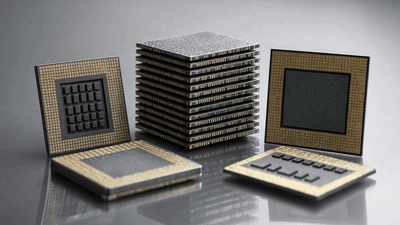
ASP and bit growth are the dual engines of memory revenue. ASP captures pricing power; bit growth captures volume and capacity expansion. Together, they define the health of the memory cycle far more directly than simple stock prices or generic sector labels. This post outlines a practical methodology for building an index that explicitly focuses on ASP and bit growth, suitable for use as the basis for ETFs and index derivatives targeting the AI storage theme.
Why ASP and Bit Growth Should Anchor the Index
Memory chip companies do not sell “chips” in the abstract. Their revenues and margins are driven by:
- Average Selling Price (ASP): The price per unit (e.g., per gigabit or per package) for DRAM, NAND, HBM, etc. ASP reflects supply/demand balance, product mix, and negotiation power.
- Bit growth: The growth in bits shipped—i.e., total memory capacity delivered. This includes volume and density improvements (more bits per die, more layers in NAND, more stacks in HBM).
Revenue is roughly ASP × bits shipped. Margin expansion or contraction often follows from ASP changes; long-term scale and relevance come from sustained bit growth. An index that tracks memory chip companies without explicitly considering these two factors risks missing the core dynamics of the cycle.
By embedding ASP and bit growth into index methodology—through constituent selection, weighting, and rebalancing rules—you build a tool that responds to the actual economic drivers of memory, not just to broader market sentiment.
Step 1: Define the Memory Universe

The starting point is a precise universe of memory chip companies. This includes:
- Pure-play DRAM/HBM producers: Companies whose primary business is DRAM and high-bandwidth memory.
- Pure-play NAND producers: Companies focused on NAND flash and related non-volatile storage.
- Diversified memory-centric firms: Companies with significant memory segments that are central to AI storage, even if they also have other lines.
It excludes firms whose memory exposure is incidental or minor relative to other products. The goal is thematic purity: every constituent should be meaningfully exposed to ASP and bit growth dynamics in DRAM/NAND/HBM.
To avoid undue concentration, the universe can be segmented by memory type (DRAM vs NAND vs HBM) and by region (Korea, U.S., Japan, etc.), but the core requirement is clear: memory chip economics must be central to the company.
Step 2: Collect ASP and Bit Growth Data
Next, you need data. For each company in the universe, gather:
- ASP data: Average selling price per unit of memory over time, ideally segmented by product (DRAM, NAND, HBM). Where granular data is not available, use proxies such as segment revenue per bit.
- Bit shipment data: Bit growth over time—bits shipped or total capacity delivered, again ideally by product segment.
ASP and bit growth are often available in company disclosures, industry reports, or specialized memory market data services. For index purposes, you may adopt standardized industry ASP and bit growth estimates for each company’s core products, harmonized across the universe.
The time dimension matters. You are not only interested in current ASP and bit growth, but also in their trajectory—year-on-year, quarter-on-quarter growth and trends. That trajectory will drive your index rules.
Step 3: Build Factor Scores for ASP and Bit Growth

With data in hand, construct factor scores that capture each company’s ASP and bit growth dynamics. For example:
- ASP factor score: Use metrics such as ASP level relative to peers, ASP YoY change, and volatility-adjusted ASP trends.
- Bit growth factor score: Use bit shipment growth rates, capacity expansion measures, and sustained bit growth over various horizons.
You can normalize these scores across companies to produce standardized values (e.g., z‑scores) for each factor. This transforms raw ASP and bit growth figures into comparable indicators of pricing power and volume growth.
The dual factor framework then becomes the foundation: each company has an ASP score and a bit growth score that will influence its index weight.
Step 4: Define Weighting Rules Based on Dual Factors
Weighting is where the dual factor methodology comes to life. Instead of using pure market cap, you can define weights as a function of ASP and bit growth scores (with market cap still influencing liquidity and investability). A practical scheme might be:
- Base weight proportional to market cap to ensure liquidity.
- Adjust weight upward for companies with high ASP factor scores (pricing strength).
- Adjust weight upward for companies with high bit growth factor scores (volume and capacity growth).
- Cap extreme weights to avoid overconcentration.
Mathematically, a company’s index weight W could be expressed as:
W ∝ MarketCap × (1 + α · ASPScore + β · BitGrowthScore)
where α and β are coefficients controlling the influence of ASP and bit growth. You can calibrate these coefficients based on historical performance and risk analysis.
This approach ensures that companies leading in memory pricing and capacity expansion receive higher representation in the index, reflecting their central role in the cycle.
Step 5: Segment and Balance DRAM vs NAND vs HBM

Memory is not monolithic. DRAM, NAND, and HBM have different cycle characteristics. Your dedicated memory index should account for that by creating segments:
- DRAM segment: Weight determined by ASP/bit growth factors for DRAM.
- NAND segment: Separate factor scoring and weighting based on NAND dynamics.
- HBM segment: Emerging but increasingly important; factor scores may emphasize ASP and capex commitments to HBM.
You can assign target segment weights—for example, 40% DRAM, 40% NAND, 20% HBM—reflecting the current and expected importance of each type. Within each segment, apply the dual factor weighting rules.
This segmentation allows the index to adjust not only at the company level but also at the memory-type level as AI storage and computing needs evolve.
Step 6: Rebalancing and Cycle Sensitivity
Rebalancing rules determine how the index responds to changes in ASP and bit growth. Memory cycles are volatile; your methodology should capture these changes without overreacting to short-term noise.
A practical rebalance framework might be:
- Quarterly factor updates: Update ASP and bit growth scores quarterly based on the latest data.
- Semi-annual or annual rebalancing: Adjust weights semi-annually or annually based on updated scores to avoid excessive turnover.
- Cycle-aware adjustments: Consider smoothing mechanisms or thresholds to avoid dramatic weight changes due to temporary spikes or dips.
The goal is to tilt the index toward pricing and volume leaders in a cyclic yet controlled way, recognizing that memory dynamics can be sharp but also mean-reverting. The rebalance cadence should match the pace of meaningful cycle shifts rather than daily moves.
Step 7: Integrating Liquidity and Risk Constraints
Even with ASP and bit growth at the core, practical index design needs liquidity and risk constraints. Consider:
- Minimum market cap or trading volume: Exclude very illiquid names even if they have attractive factor scores.
- Maximum stock weight caps: Prevent a single heavyweight from dominating the index, especially in segments with few players.
- Regional caps: Avoid overconcentration in a single country if the goal is global memory representation.
These constraints help ensure that the index is investable via ETFs and derivatives, and that it does not become a disguised single-stock bet or a regional concentration tool.
Risk management can also include monitoring index-level volatility and drawdown, adjusting α and β coefficients or segment weights if risk becomes misaligned with investor objectives.
Step 8: Using the Index for ETFs and Derivatives
Once the dedicated memory chip index is defined, it can serve as the basis for ETFs and index derivatives tailored to AI storage and computing power strategies. Possible products include:
- Memory chip ETFs: Funds that track the index, giving investors direct exposure to the ASP/bit growth-driven basket.
- Futures and options on the index: Derivatives that enable tactical trades, hedging, and structured exposure to memory cycles.
- Structured notes and overlays: Products that combine the memory index with AI compute indices to create balanced AI hardware payoffs.
ETFs offer straightforward index exposure, while derivatives allow more complex positioning—betting on cycle inflection points, protecting against downside, or amplifying specific memory-type bets (e.g., HBM vs NAND). The dual factor methodology ensures that these products are grounded in the actual economic drivers of memory rather than generic semi exposure.
For AI storage and computing power investors, such an index becomes a central tool in structuring hardware sleeves and hedging risk.
Step 9: Alpha and Risk-Adjusted Performance Evaluation
After launching the index, continuous evaluation is needed to confirm that focusing on ASP and bit growth delivers meaningful risk-adjusted performance compared to simpler constructions (e.g., cap-weighted memory indices). This involves:
- Comparing returns to conventional semi or memory indices.
- Assessing Sharpe ratios and drawdowns to gauge whether dual factor tilts improve resilience.
- Attributing index performance to ASP changes, bit growth shifts, and market-wide factors.
If the dual factor index consistently highlights cycle leaders and avoids weak pricing and volume profiles, it should deliver better trend-capture and drawdown management than naive cap-weighted benchmarks. If not, factor weights or scoring methodologies may need refinement.
Alpha validation here is about proving that ASP and bit growth are not just intuitive factors but practically useful ones in index design.
Step 10: Future-Proofing the Methodology
The AI storage and computing power landscape will evolve. New memory technologies (e.g., emerging non-volatile memory, CXL-attached memory pools), new packaging methods, and new supply chain structures will emerge. A dedicated memory chip index must be future-proofed to stay relevant.
Future-proofing includes:
- Adding new memory types and products to the factor framework when they become economically significant.
- Updating ASP and bit growth definitions to reflect new business models (e.g., memory-as-a-service, new pricing schemes).
- Revisiting segment weights (DRAM, NAND, HBM, new types) as AI storage usage patterns change.
The index methodology should be flexible enough to incorporate these changes without losing its core focus: the dual economic drivers of ASP and bit growth. That ensures it remains a meaningful representation of the memory cycle in an AI world, not a static relic of past hardware eras.
Conclusion
A dedicated memory chip index grounded in ASP and bit growth dual factors is a practical way to capture the true economics of AI storage. It moves beyond generic semiconductor exposure and gives investors, ETF providers, and index derivative users a tool that reflects the realities of memory pricing and capacity expansion.
By defining a precise memory universe, building ASP and bit growth factor scores, applying dual factor weighting, and embedding robust rebalancing and risk constraints, you can design an index that responds to the memory cycle in a disciplined, theme-aligned way. Such an index can underpin ETFs and derivatives that serve as core components of AI storage and computing power strategies.
In an era where memory is increasingly the bottleneck and the scale driver of AI infrastructure, having an index methodology that truly focuses on ASP and bit growth is not just clever—it is necessary for anyone serious about investing in the hardware behind AI.